DNA transcription is a process that involves the transcribing of genetic information from DNA to RNA. The transcribed DNA message is used to produce proteins. DNA translation is the process of protein production using mRNA that is produced in genetic transcription.

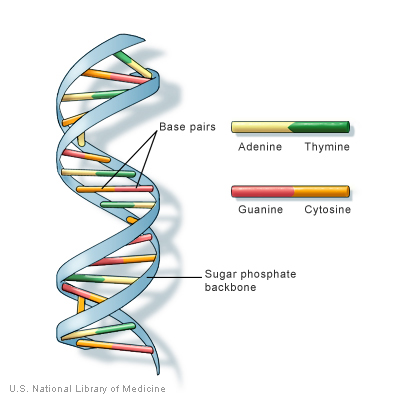
DNA is the entire sequence of an organism, and is found in nearly every cell of the organism. DNA stands for deoxyribonucleic acid. A DNA molecule contains all the information necessary to grow, build and maintain an organism. First discovered in 1869 by Frederick Miescher, it's fundamental to our understanding of basic genetics. Tucked away inside are the chemical instructions to make proteins that go on to produce the tissues, structures and chemicals that all known living organisms require.
Genes
They are a specific sequence of genetic material that has the instructions for making one and only one protein. These proteins decide whether you have blond hair of brown, blue eyes of green, and every other trait in your body. Each person has 46 genes; 23 from your father, and 23 from your mother. In some cases a child will be born with 22 genes from their father, and 24 from their mother, causing things like Down Syndrome. Down Syndrome is one of the most serious chromosomal genetic diseases. It happens due to errors during the cell division. In humans, genes vary in size from a few hundred DNA bases to more than 2 million bases. The Human Genome Project has estimated that humans have between 20,000 and 25,000 genes.
Chromosomes
In the nucleus of each cell, the DNA molecule is packaged into thread-like structures called chromosomes. Each chromosome is made up of DNA tightly coiled many times around proteins called histones that support its structure.
Chromosomes are not visible in the cell’s nucleus—not even under a microscope—when the cell is not dividing. However, the DNA that makes up chromosomes becomes more tightly packed during cell division and is then visible under a microscope. Most of what researchers know about chromosomes was learned by observing chromosomes during cell division.
Each chromosome has a constriction point called the centromere, which divides the chromosome into two sections, or “arms.” The short arm of the chromosome is labeled the “p arm.” The long arm of the chromosome is labeled the “q arm.” The location of the centromere on each chromosome gives the chromosome its characteristic shape, and can be used to help describe the location of specific genes.
